

Pool Water Chemistry Dubai Guide 2026 | pH, Chlorine & Balance Tips

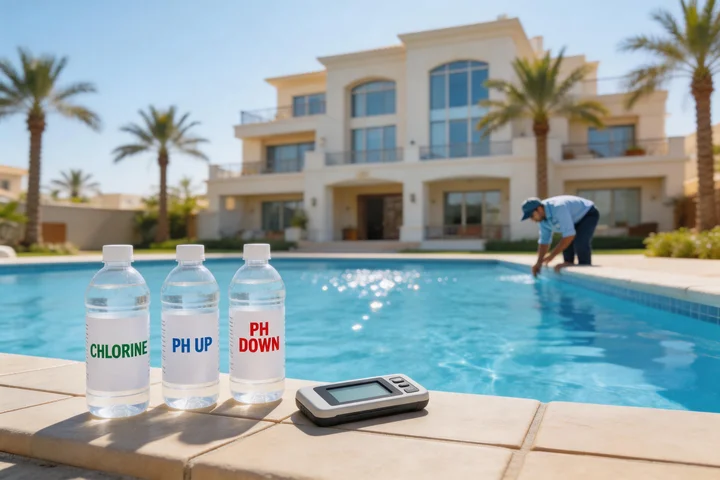
Pool water chemistry in Dubai is essential for keeping your swimming pool safe, clean, and crystal clear. This guide explains pH balance, chlorine levels, algae control, and water testing tips tailored for UAE conditions.
Table of Contents
- Why pH Balance Matters
- Complete Chemical Balancing Guide
- Understanding Chlorine
- Pool Water Testing Guide
- How to Balance Pool Water
- Algae Problems & Treatment
- Pool Water Safety & Health
- Choosing Pool Sanitisers
- Maintaining Crystal Clear Water
- Frequently Asked Questions
1. Why pH Balance Matters
Maintaining proper pool pH balance in Dubai is the foundation of clean and safe water. The ideal pH range is between 7.2 and 7.6. When pH drops too low, water becomes acidic, causing skin irritation and equipment corrosion. When pH rises too high, chlorine becomes less effective and water turns cloudy.
2. Complete Chemical Balancing Guide
Proper pool water chemistry Dubai involves balancing multiple elements. Total alkalinity should remain between 80–120 ppm to stabilize pH. Calcium hardness should be maintained between 200–400 ppm to prevent scaling or corrosion. Cyanuric acid helps protect chlorine from UV damage and should stay between 30–50 ppm.
3. Understanding Chlorine
Chlorine is essential for killing bacteria and keeping pool water safe. In Dubai’s climate, chlorine depletes quickly due to heat and sunlight. Maintain free chlorine levels between 1–3 ppm. Regular shock treatment helps eliminate contaminants and restore water clarity.
4. Pool Water Testing Guide
Regular testing is critical for maintaining pool water chemistry Dubai. Use test kits or strips to measure chlorine, pH, alkalinity, and stabilizer levels. During summer, test water at least twice a week to keep conditions stable.
5. How to Balance Pool Water
Follow the correct sequence when balancing water. Start with alkalinity, then adjust pH, followed by calcium hardness and stabilizer. Finally, correct chlorine levels. Always add chemicals one at a time and allow proper circulation before retesting.
6. Algae Problems & Treatment
Algae growth is common in Dubai pools due to heat and sunlight. Green algae is most common, while black algae is more stubborn. Shock treatment combined with brushing and filtration helps eliminate algae effectively.
7. Pool Water Safety & Health
Balanced water ensures swimmer safety. Poor chemistry can lead to bacteria growth, skin irritation, and infections. Maintaining proper sanitation levels is essential for safe swimming conditions.
8. Choosing Pool Sanitisers
Chlorine is the most common sanitiser, but alternatives include saltwater systems, UV sterilizers, and ozone systems. Each option offers different benefits depending on your pool setup and maintenance preferences.
9. Maintaining Crystal Clear Water
Clear water requires balanced chemicals, proper filtration, and regular cleaning. Run your pool pump daily and use clarifiers if needed to remove fine particles.
10. Frequently Asked Questions (FAQs)
What is the ideal pH level for pools in Dubai?
7.2 to 7.6 is the ideal range for safe and effective water balance.
How often should pool water be tested?
At least twice a week in summer and once a week in winter.
Why does chlorine disappear quickly in Dubai?
High temperatures and UV rays break down chlorine rapidly.
What causes cloudy pool water?
High pH, low chlorine, or poor filtration are common causes.
How do I remove algae from my pool?
Shock the pool, brush surfaces, and run filtration continuously.
What is pool shock treatment?
A high dose of chlorine used to eliminate contaminants and restore clarity.
Is saltwater better than chlorine?
Saltwater systems are softer on skin but still generate chlorine for sanitation.
What is cyanuric acid used for?
It protects chlorine from UV breakdown in sunlight.
Can I balance pool water myself?
Yes, with proper testing and correct chemical use.
How long should the pool pump run daily?
8–12 hours in summer and 6–8 hours in winter.